Dorf · Co. Galway

Carna

The Gaeltacht focal point of west Connemara — a Garda station, the lifeboat, the health centre and the university's Irish-language centre, at the edge of the bog country 74 km west of Galway.

The place

Carna is an area in Connemara, County Galway, Ireland, located on the country's west coast in the Gaeltacht, about 74 km west of Galway city. Carna is an extremely small area, but as a focal point for the surrounding areas it contains a Garda Síochána station, a Health Centre including a Rapid Response Ambulance, a football pitch and an Irish Coastguard lifeboat — the services that the far-west country needs, gathered in one place. Carna is not located close to any villages: it is the country itself, with the lifeboat at the water and the station at the crossroads.

The history in the numbers

The population of the area dropped dramatically from a previous average of 8,000 before the Great Famine, and the age of the average resident is significantly higher than the Irish national average — the Famine took the young people and the numbers, and the place that remains is the older country of the west, with the story of the loss written into the landscape. The bogs, the headlands and the small settlements that the coast road passes are the country the area serves.

The university in the west

The National University of Ireland, Galway, has an Irish-language and educational centre, Áras Shorcha Ní Ghuairim, in Roisín na Mainiach, near Carna. It also operates a marine biology station, the Martin Ryan Institute, in Maínis, and an atmospheric research station at Mace Head, Carna, run by the university's experimental physics department. The research stations are the place's second life: the marine station on the coast, the physics station on the headland, and the Irish-language centre in the village country between them.

Practical

Carna is on the west coast of Connemara, 74 km from Galway city; the lifeboat and the research stations are the days out, and the bog country is the walk. The area is open ground with no cover — check the forecast before travelling, and the tracks are rough underfoot in wet weather.

Quellen & Überprüfung

🧭 Route anzeigen

Übernachten

Stay in the far west

The Carna country puts the lifeboat, the research stations and the bog all within a drive — the coast is the point.

  • Carna countryThe small settlements on the coast road — the guesthouses and B&Bs of the far west. · in the area
  • ClifdenThe capital of the region, a drive to the east — the bigger base. · 30 min by car
See stays in Connemara ↗

Aktuelle Verfügbarkeit für Ihre Reisedaten. Verfügbarkeit und Preise stammen vom Anbieter, nicht von uns.

Mehr in Galway

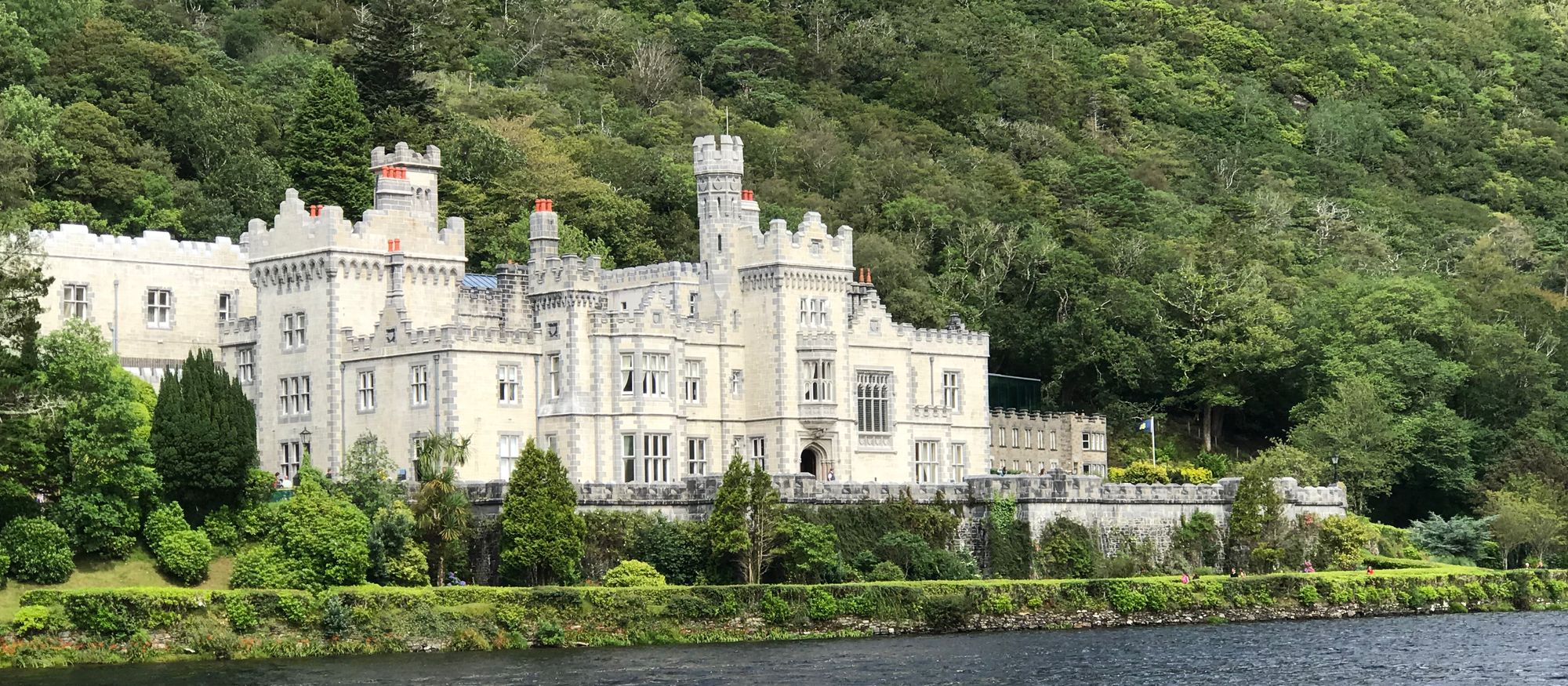
Kylemore Abbey reflected in Pollacapall Lough, County Galway
Ausflugsziel · Co. Galway

Kylemore Abbey

A castle turned abbey on the shore of Kylemore Lough in Connemara, three kilometres from Letterfrack in Co. Galway — one of the most photographed buildings in the west of Ireland, with a story that goes back to the 1860s.

Gardens and castle ticketed; the abbey grounds are free to view from the shore.· Einplanen 2–3 hours
Dorf · Co. Galway

Athenry

“Town of the ford of the king” — the medieval town on the River Clare, 25 km east of Galway, with the town wall, the castle, the priory, the 13th-century street-plan and the song that made its fields famous.

The town is free to visit. The castle and the priory may charge entry — confirm the current prices and opening hours before travelling.
Baudenkmal · Co. Galway

Ballynahinch Castle

The 1754 country house on Ballynahinch Lake, directly overlooked by Benlettery of the Twelve Bens — home once to Richard Martin, “Humanity Dick”, founder of the Society for the Prevention of Cruelty to Animals, now a hotel in a private estate.

The hotel and the estate carry their own arrangements for dining, stays and visiting — confirm the current prices before travelling. No admission for the lake view from the public road.
Dorf · Co. Galway

Cleggan

“The headland” — the fishing village at the head of Cleggan Bay, 10 km from Clifden, with the pier that Alexander Nimmo built in 1822 and the daily ferries to Inishbofin and Inishturk.

The village is free to visit. The island ferries carry their own fares — confirm the current schedules and prices before travelling.