Streek · Co. Mayo

Erris

The barony of the western promontory — Iar Ros, the Iorrais Domnann — over 932 km² of mountainous blanket bog on the wild Atlantic, with Belmullet and Bangor Erris as its towns and the Mullet at its western end.

The barony

Erris is a barony in northwestern County Mayo in Ireland, consisting of over 230,452 acres (932.61 km²), much of it mountainous blanket bog. It has extensive sea coasts along its west and north boundaries, and its main towns are Belmullet and Bangor Erris. The name Erris derives from the Irish “Iar Ros”, meaning “western promontory”, and the full name is the Iorrais Domnann, after the Fir Bolg tribe, the Fir Domnann. The country is the western end of Mayo: the wild Atlantic on the north, the bays of Broadhaven and Sruth Fada Conn, and Blacksod Bay to the west.

The promontories

Erris’s main promontories are the Doohoma Peninsula, the Mullet Peninsula, Erris Head, the Dún Chiortáin and Dún Chaocháin peninsulas and Benwee Head — the headlands that break the coast into the bays, and the Mullet is the largest of them. The barony is the country that the Wild Atlantic Way runs along at its wildest: the blanket bog, the headlands and the bays, with the villages tucked into the shelter of the water. There are five Catholic parishes in Erris: Kilcommon, Kilmore, Kiltane, Belmullet and Ballycroy, and the parish country is the older country of the barony.

The Gaeltacht

Parts of Erris are in a Gaeltacht area, with first-language speakers of Irish in the following areas of the barony: An Fál Mór, Tamhain na hUltaí, Glais and the surrounding townlands — the Irish-speaking heart of the barony, and the reason the sign on the gate says so. The barony is the place where the Mayo Gaeltacht meets the Atlantic, and the walk through its villages is the walk that gets done before any of the headlands.

Practical

Erris is a drive from Westport and Castlebar, and the barony is big enough that a day is not enough for it: the Mullet on one day, the bays on another, and the villages in between. Belmullet and Bangor Erris are the bases, and the weather on the headlands is the whole story.

Bronnen & verificatie

🧭 Route plannen

Waar logeren

Stay in the barony of the promontory

Belmullet and Bangor Erris put the Mullet, the bays and the blanket bog all within a short drive.

  • BelmulletThe town at the Mullet’s gate — guesthouses and B&Bs at the barony’s western end. · at the Mullet
  • Bangor ErrisThe barony’s other town — a short drive from Belmullet, closer to the bog country. · 20 min by car from Belmullet
See stays in Erris ↗

Bekijk de actuele beschikbaarheid voor je data. Beschikbaarheid en prijzen komen van de aanbieder, niet van ons.

Meer in Mayo

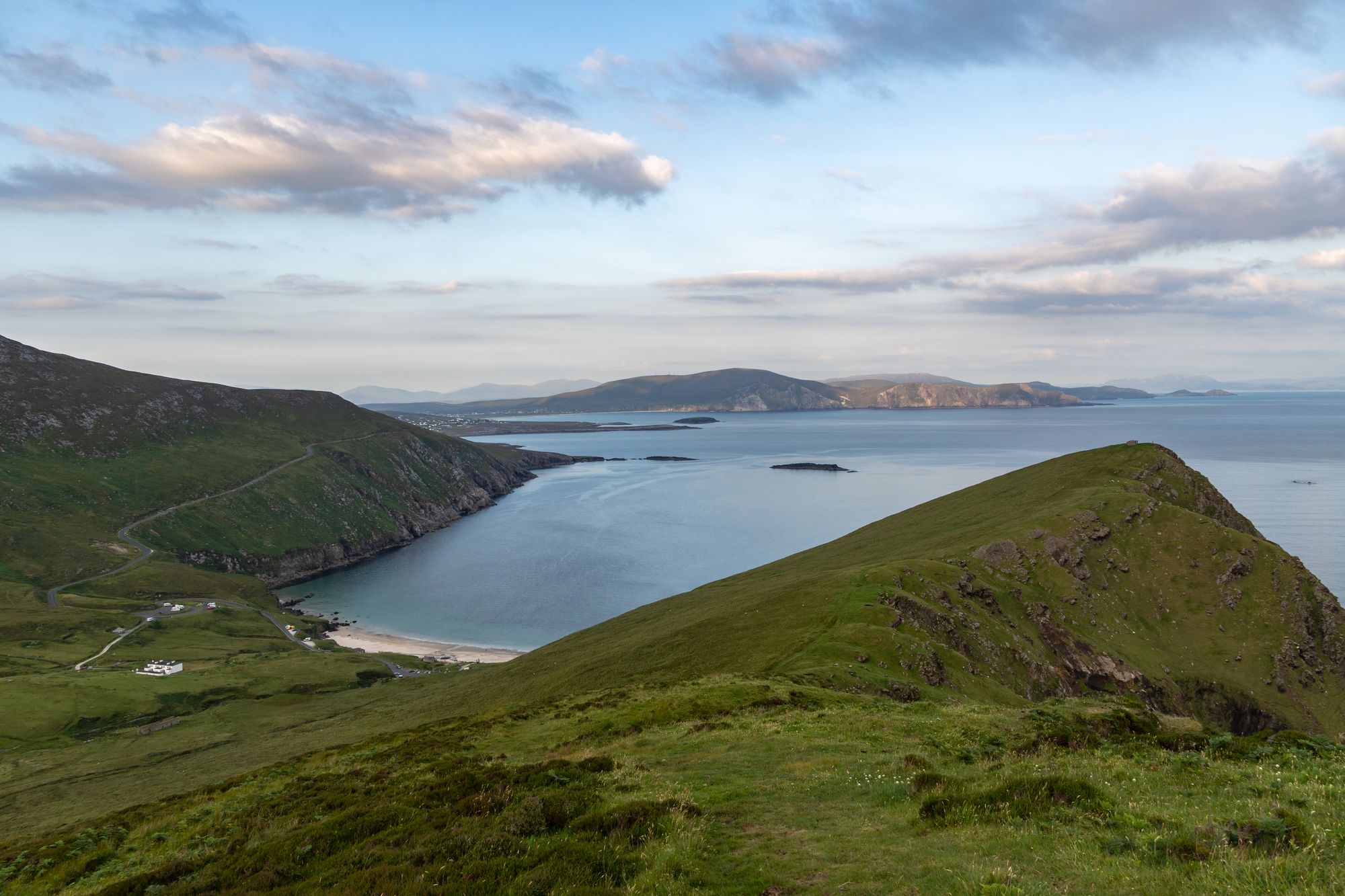
Keem Bay and the cliffs of Achill Island, County Mayo
Eiland · Co. Mayo

Achill Island

The largest island off the west coast, linked to the mainland by a bridge over Achill Sound since 1887 — wild Atlantic headlands, black-pebble bays, a lighthouse with a story, and a landscape that has shaped Irish life for a thousand years.

Free to explore; a small charge at some coastal car parks.· Reserveer A full day is not enough; allow two or three days.
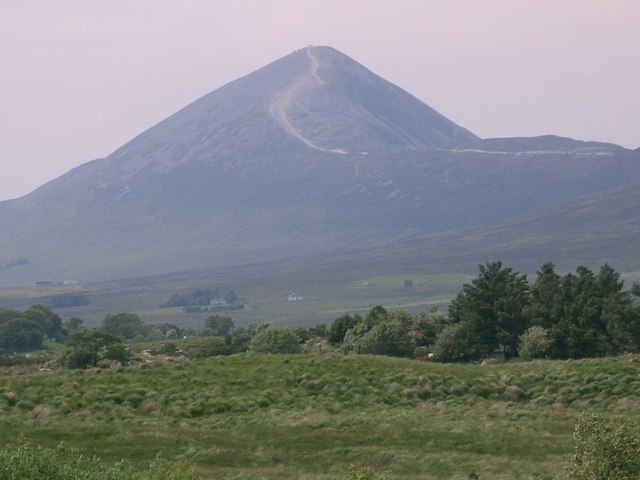
The ascent path to Croagh Patrick in County Mayo, the peak behind
Wandeling · Co. Mayo

Croagh Patrick

The 764-metre mountain near Murrisk, traditionally the place where St Patrick fasted — a broad, windswept summit and one of the great walking and pilgrimage places in the country.

Free to climb.· Reserveer 2–3 hours to the summit and back; 3–4 hours for the round.
Dorp · Co. Mayo

Ballina

“Mouth of the ford” — the town at the mouth of the River Moy near Killala Bay, with the Ox Mountains to the east and the Nephin Mountains to the west, and the Bronze Age Dolmen of the Four Maols behind the station.

The town is free to visit. No admission for the town — the dolmen is on open ground.
Dorp · Co. Mayo

Belmullet

“Mouth of the Mullet” — the coastal Gaeltacht town at the isthmus, with the two bays of Blacksod and Broadhaven linked by Carter’s Canal running through the town, and half the population able to speak Irish.

The town is free to visit. Any specific sites on the Mullet carry their own arrangements — confirm the current prices before travelling.