The region
Connemara (Conamara in Irish) is a region on the Atlantic coast of western County Galway, in the west of Ireland. Historically it was part of the territory of Iar Connacht, West Connacht, and the name comes from the tribal name Conmhaicne Mara — a branch of the Conmacne who lived by the sea and took their name from it. The region is mostly rural, and its largest settlement is Clifden.
The Gaeltacht
Connemara has a strong association with traditional Irish culture, and it contains most of the Connacht Irish-speaking Gaeltacht — a key part of its identity and the largest Gaeltacht in Ireland. That is the thing the region is: the Irish-speaking country of the west, where the sign on the gate says so and the conversation in the pub runs in both languages. The towns and villages — Clifden, Roundstone, Carna, Cleggan — are the bases that make the region work.
The ground under it
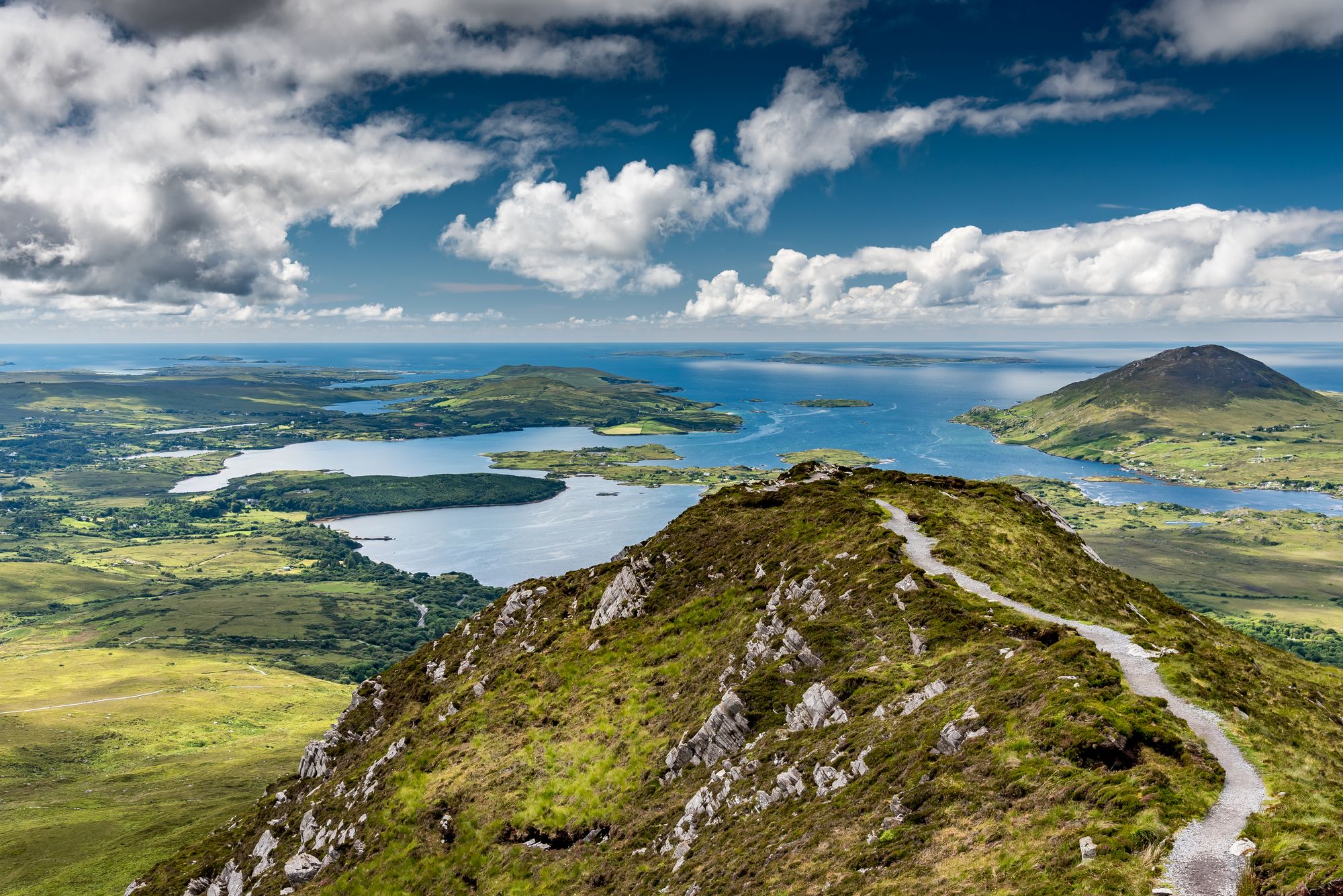
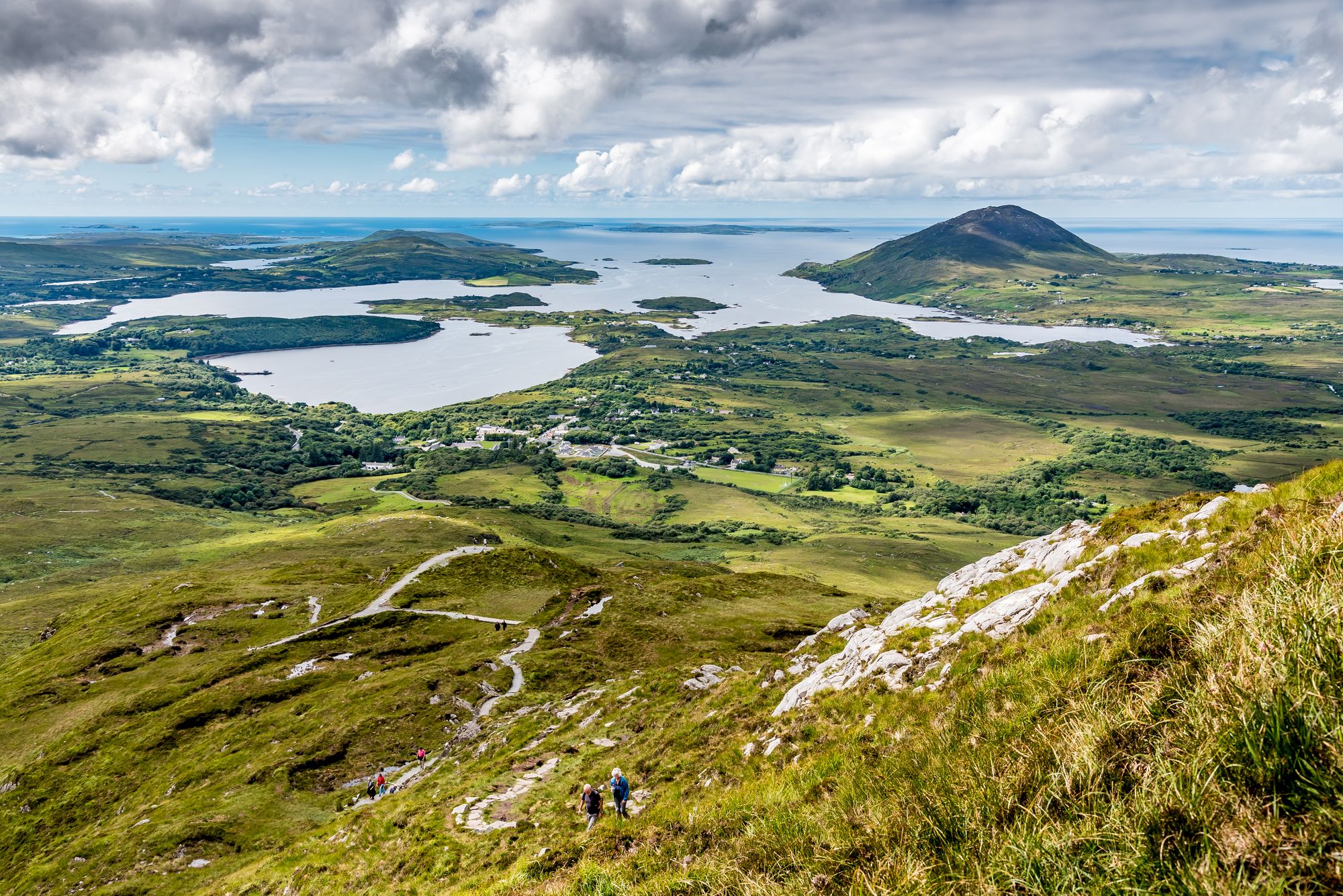
Geographically, the region has many mountains — notably the Twelve Pins, the sharp-peaked quartzite range of Connemara National Park — along with peninsulas, coves, islands and small lakes. The northwest is the wildest: Connemara National Park sits in it, and the country beyond — the bogs, the peaks and the bare limestone — is the country the WAA runs through at its most open. A single day is not enough for Connemara: the coast on one day, the mountains on another, and the villages in between.
Practical
Connemara is a drive from Galway city — roughly an hour to the region's heart on the N59 — and the towns (Clifden, Roundstone, Carna, Cleggan) are the bases, with the parks, the ranges and the coves as the days out. Check the weather before the mountains: the country is open, and the forecast is the whole story.
🧭 Route anzeigen