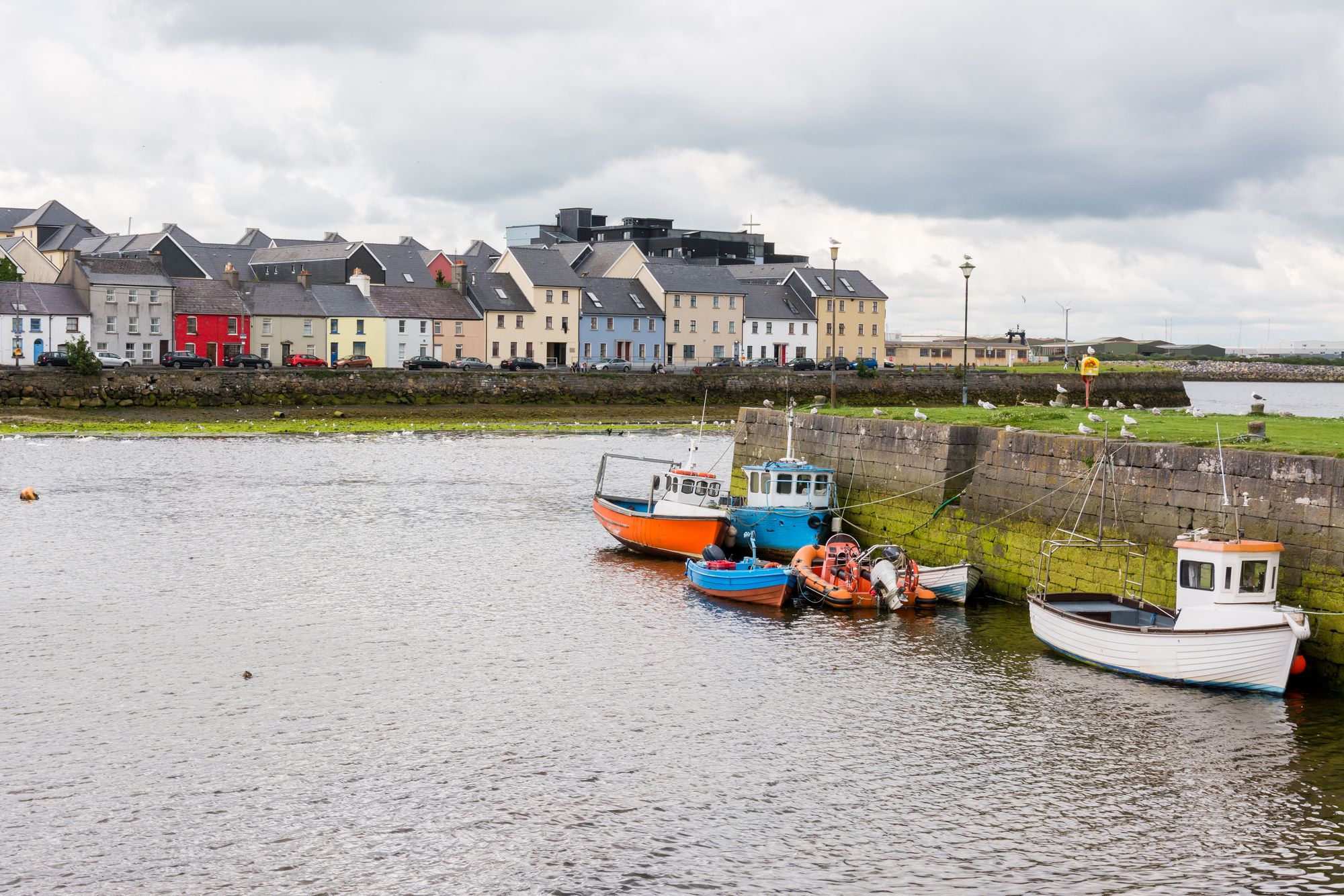
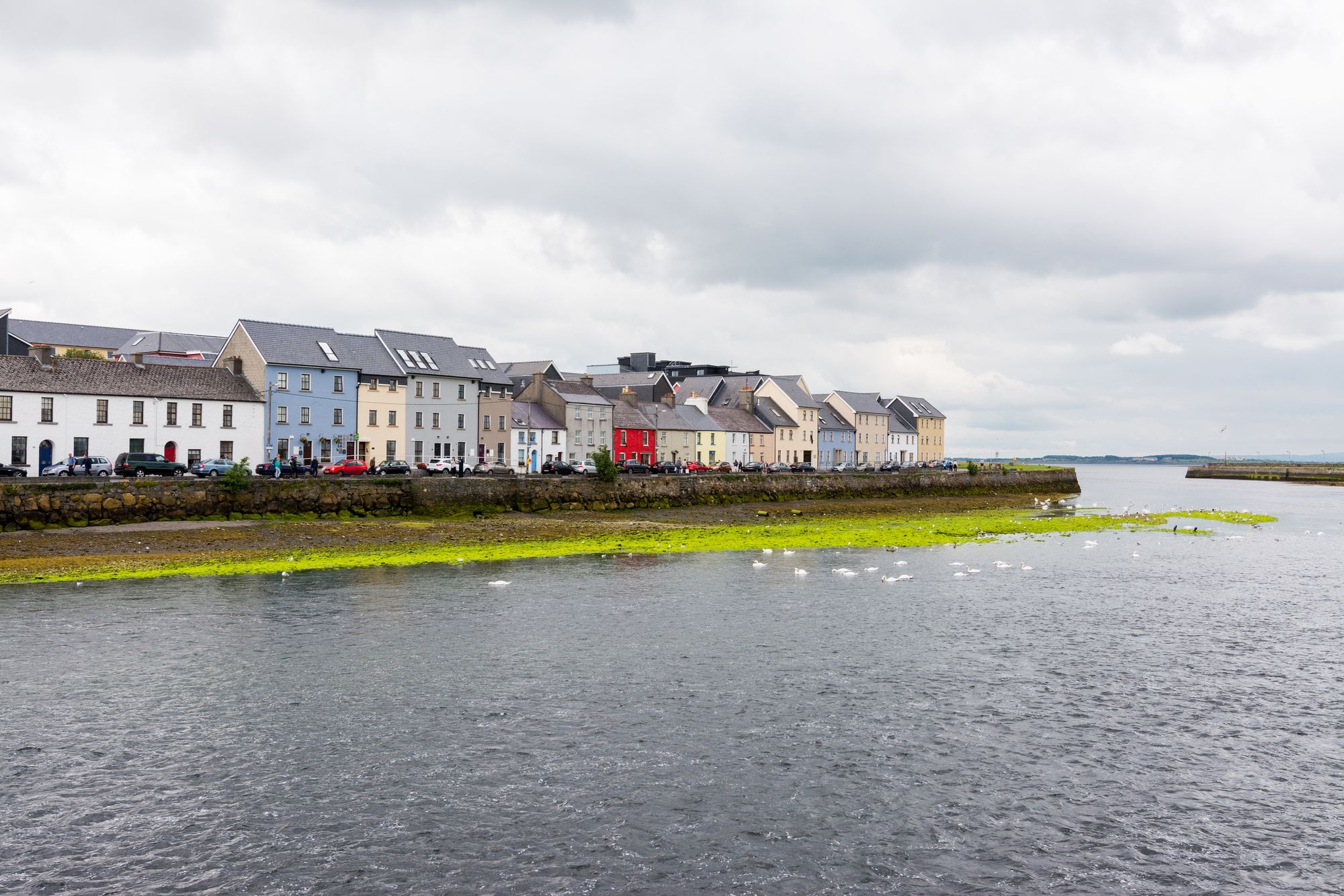
The quay and harbour front of Galway city along the River Corrib

Village · Co. Galway

Galway

“City of the Tribes” at the mouth of the Corrib — the largest city in Connacht, European Capital of Culture in 2020, with the old fishing quarter of the Claddagh and the bay that carries the city out to sea.

Galway, County galway — photo by luckystudio

The city

Galway (Gaillimh in Irish) is a city in — and the county town of — County Galway. It lies on the River Corrib between Lough Corrib and Galway Bay, and it is the most populous settlement in the province of Connacht, the fifth most populous city on the island of Ireland and the fourth most populous in the Republic, with a population of 85,910 at the 2022 census. The city sits where the lough meets the bay: the Corrib runs through it from the lough to the sea, and the walk from the waterfront to the old town is the walk that gets done first.

The name and the fort

The city's name comes from the Irish Gaillimh, a river which formed the western boundary of the earliest settlement, Dún Gaillimh, the “Fort Gaillimh”. Dún Gaillimhe was completed in 1124 by Tairrdelbach Ua Conchobair, King of Connacht and High King of Ireland, and it served as a naval base from which his fleet operated. A new settlement grew around it. During the Norman invasion of Connacht in the 1230s the fort was captured by Richard Mor de Burgh, who had led the invasion — and as the de Burghs became Gaelicised, the merchants of the town took over.

The Tribes

The city bears the nickname “City of the Tribes” (Cathair na dTreabh in Irish) because of the fourteen merchant families called the Tribes of Galway, who led the city in its Hiberno-Norman period. A municipal charter in 1484 allowed the citizens of the by-then walled city to form a council and mayoralty, and the Tribes pushed for — and won — complete control, and the city grew into a trading port on the bay.

The city today

Following a period of decline, Galway is now a tourist destination known for its festivals and events, including the Galway International Arts Festival. In 2018 the city was named the European Region of Gastronomy, and in 2020 it was the European Capital of Culture, alongside Rijeka in Croatia. The Claddagh — the old fishing quarter on the east bank of the Corrib — and the Spanish Arch at the head of the river are the two places that give the city its shape, and the bay beyond them is the city's front door to the Atlantic.

Practical

Galway city is the hub of the whole west: the N59 runs from it to Westport and Connemara, and the coast road runs south to the Clare coast. The waterfront, the Claddagh and the old town are a walk; the bay ferries to the islands run from the quayside — confirm the current schedules and prices before travelling.

Sources and verification

🧭 Get directions

Where to stay

Stay in the city of the tribes

The quayside, the Claddagh and the bay ferries are all a walk away — the city is the hub of the whole west.

  • Galway cityThe city itself — the quayside, the old town and the Claddagh. · in the city
  • Galway Bay (south shore)Oranmore, Spiddal and the villages down the bay — the quieter coastal bases. · 10–20 min by car
See stays in Galway ↗

See current availability for your dates. Availability and prices come from the accommodation provider, not from us.

More in Galway

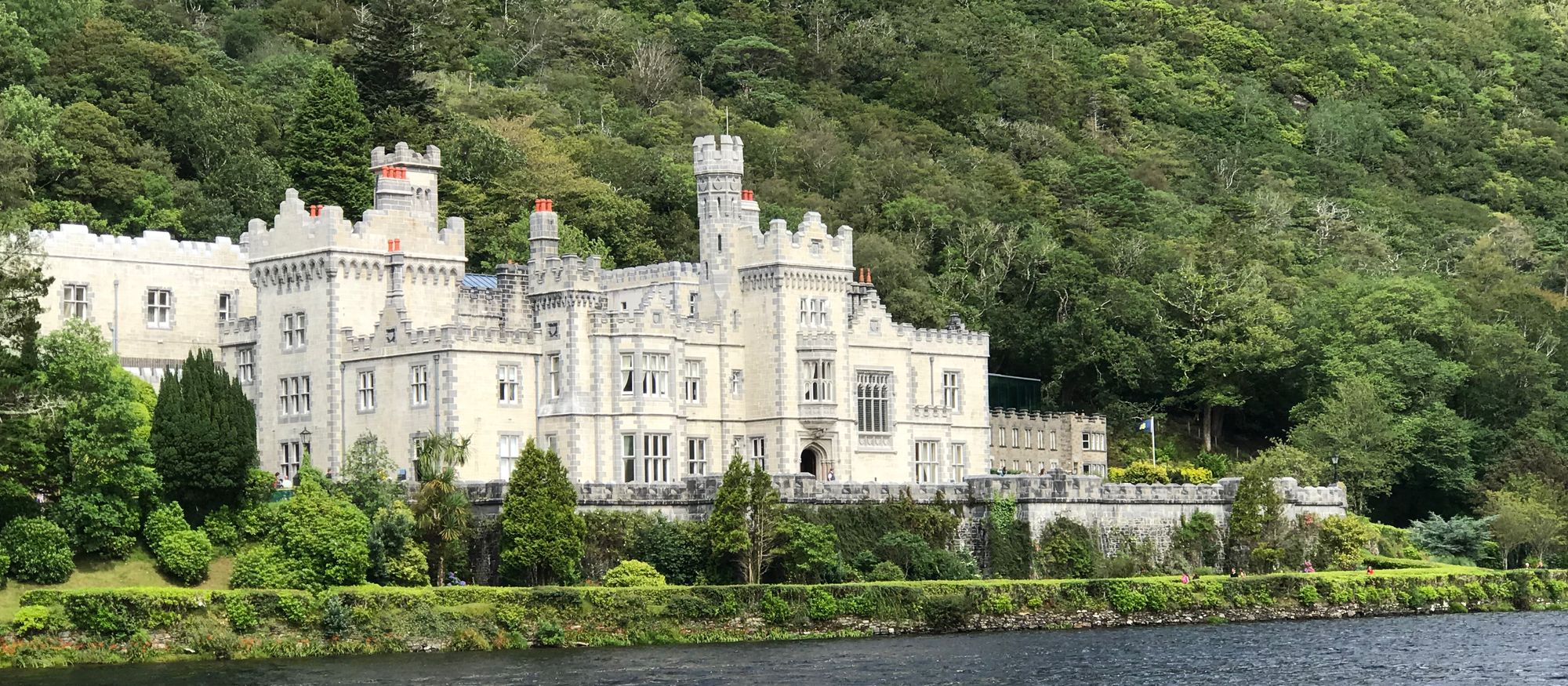
Kylemore Abbey reflected in Pollacapall Lough, County Galway
Attraction · Co. Galway

Kylemore Abbey

A castle turned abbey on the shore of Kylemore Lough in Connemara, three kilometres from Letterfrack in Co. Galway — one of the most photographed buildings in the west of Ireland, with a story that goes back to the 1860s.

Gardens and castle ticketed; the abbey grounds are free to view from the shore.· Allow 2–3 hours
Village · Co. Galway

Athenry

“Town of the ford of the king” — the medieval town on the River Clare, 25 km east of Galway, with the town wall, the castle, the priory, the 13th-century street-plan and the song that made its fields famous.

The town is free to visit. The castle and the priory may charge entry — confirm the current prices and opening hours before travelling.
Landmark · Co. Galway

Ballynahinch Castle

The 1754 country house on Ballynahinch Lake, directly overlooked by Benlettery of the Twelve Bens — home once to Richard Martin, “Humanity Dick”, founder of the Society for the Prevention of Cruelty to Animals, now a hotel in a private estate.

The hotel and the estate carry their own arrangements for dining, stays and visiting — confirm the current prices before travelling. No admission for the lake view from the public road.
Village · Co. Galway

Carna

The Gaeltacht focal point of west Connemara — a Garda station, the lifeboat, the health centre and the university's Irish-language centre, at the edge of the bog country 74 km west of Galway.

The area is free to visit. The research stations may have their own visiting arrangements — confirm before the visit. No admission for the coast and the bog country.