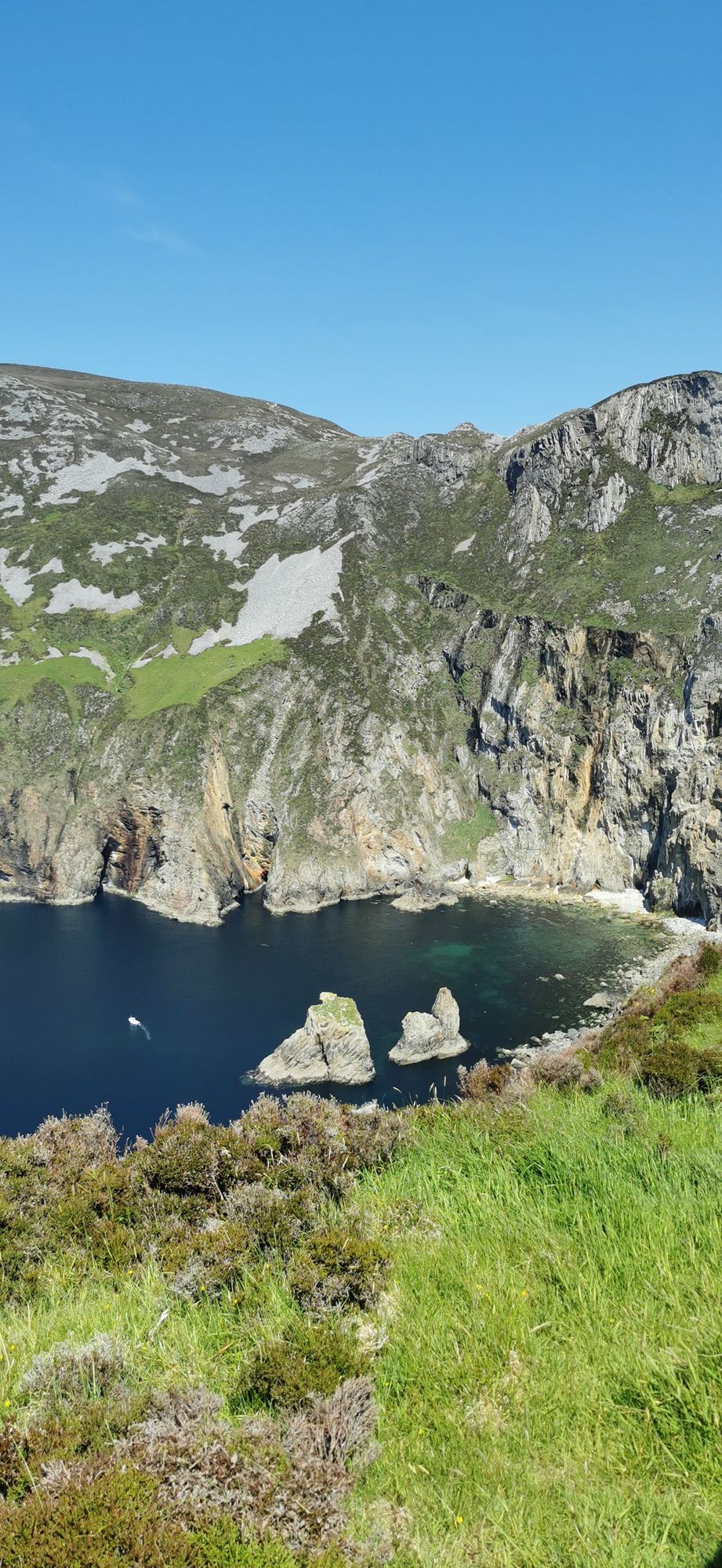
Headland · Co. Donegal
Slieve League
A wall of grey limestone dropping roughly 600 metres into the Atlantic on the Derrybeg Peninsula in southwest Donegal — among the highest sea cliffs in Europe, and only properly seen from the foot of them.
Area · Co. Donegal
One of only three glacial fjords in Ireland — the long sea inlet between Inishowen and the Fanad, with Buncrana and Rathmullan on its shores and Letterkenny at its head.
Lough Swilly (Loch Súilí in Irish, meaning “lake of eyes”) is a glacial fjord — a sea inlet — lying between the western side of the Inishowen Peninsula and the Fanad Peninsula, in County Donegal. Along with Carlingford Lough and Killary Harbour, it is one of only three glacial fjords in Ireland. The inlet is long and narrow, the Atlantic at one end and the fresh water of the River Swilly at the other, and the towns on its shore — Buncrana on Inishowen, Rathmullan on the western side — grew up around the water the way the water allowed.
Both the lough and the adjoining River Swilly (An tSúileach) carry the same name, and the story attached to it is the old one: a legendary multi-eyed sea monster, Suileach, reputedly killed by Saint Colmcille. The 1900 place-name history of Patrick Weston Joyce reads the name as referring to whirlpools or to eyes, with suileach meaning “abounding in eyes or whirlpools”. The water does have a reputation for its swirls, and the name fits it.
At the northern end of the lough, Fanad Head and its lighthouse mark the entrance, with Dunaff Head on the other side. In the south, a number of islands — Burt, Inch, Coney, Big Isle — were poldered and the land reclaimed, and the lough’s southern end lies at Letterkenny. The drive along either shore is the way to see it: the water, the headlands, the small settlements, and the light on the water in the late afternoon.
A day on the lough is a drive day: pick the Inishowen shore or the Fanad shore, and let the road do the rest. Boat trips run from Buncrana in the season — check the current operators before travelling.
Where to stay
Stay on either shore — Buncrana or Letterkenny — and the lough is inside the day.
See current availability for your dates. Availability and prices come from the accommodation provider, not from us.
A wall of grey limestone dropping roughly 600 metres into the Atlantic on the Derrybeg Peninsula in southwest Donegal — among the highest sea cliffs in Europe, and only properly seen from the foot of them.
A large, remote mountain and glen country in southwest Donegal, centred on Derryveagh National Park — one of the wildest areas of lowland and mountain on the west coast.
The northwestern tip of mainland Ireland, where the Wild Atlantic Way starts — a lighthouse, a tenth-century cross, and the widest view of two seas you will get on this coast.